Launch offer — valid today only

📄 Digital book in PDF · read it on your phone or print it

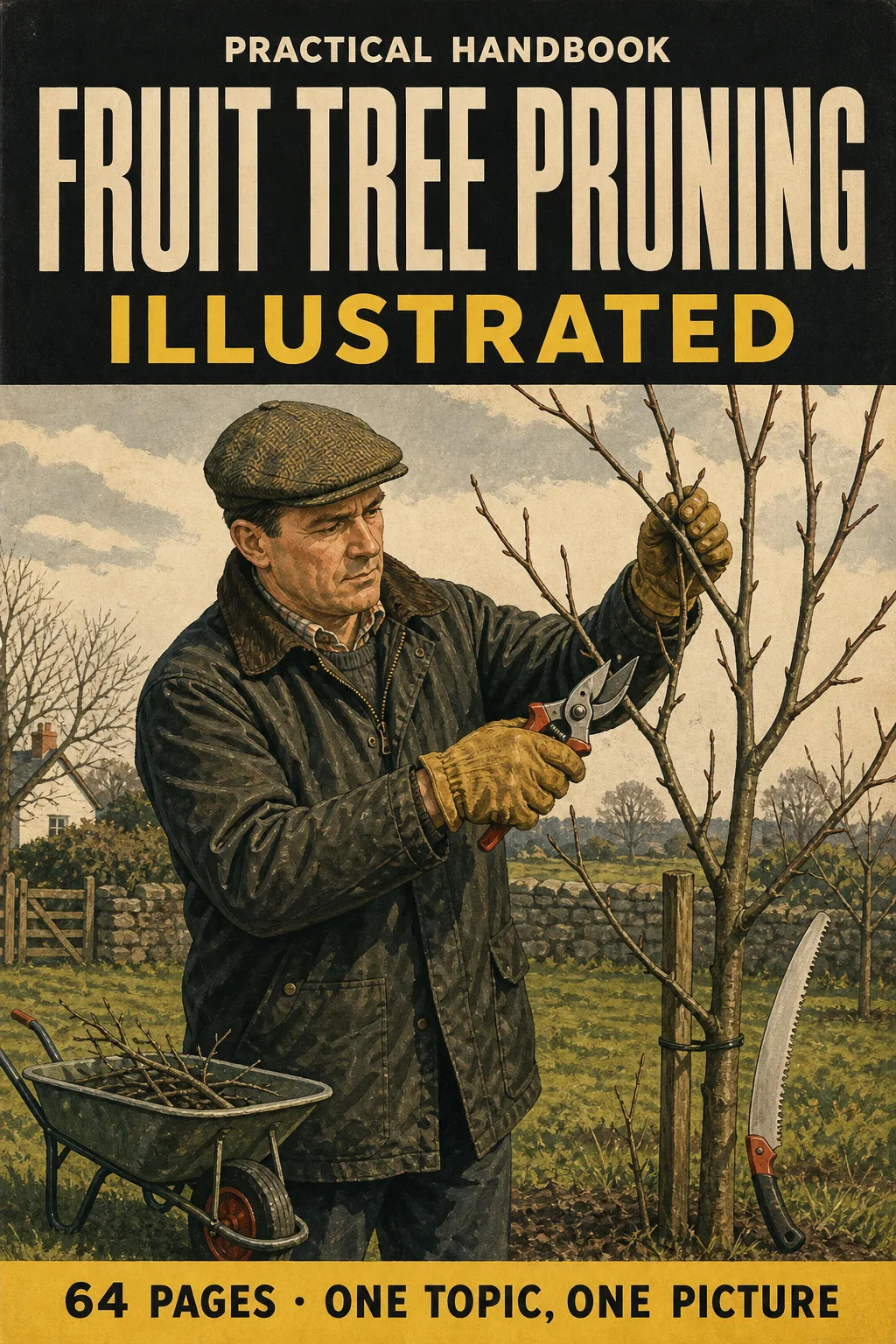
Fruit Tree Pruning for Irish Gardens, Drawn Cut by Cut Know Which Branch to Cut

Apples, pears, plums and cherries, one topic per page: which buds give fruit, where to make the cut, when to prune in Irish weather and what to do with the old tree you inherited. The drawing first, then what to remember. PDF by email, ready to print and take to the tree. 64 illustrated pages.

SHOW ME EVERY CUT

🔒 Secure checkout · PDF by email · 30-day guarantee

Every topic, its own pageEvery cut drawn, with the explanation beside it
64 illustrated pages8 parts, from the parts of a fruit tree to your pruning checklist
Up-to-date sourcesChecked against Teagasc advice, Met Éireann climate data and DAFM rules
PDF by emailFormat

Look Inside the Book

Every page has one big drawing and a box with the cuts, months and measurements you need to know:

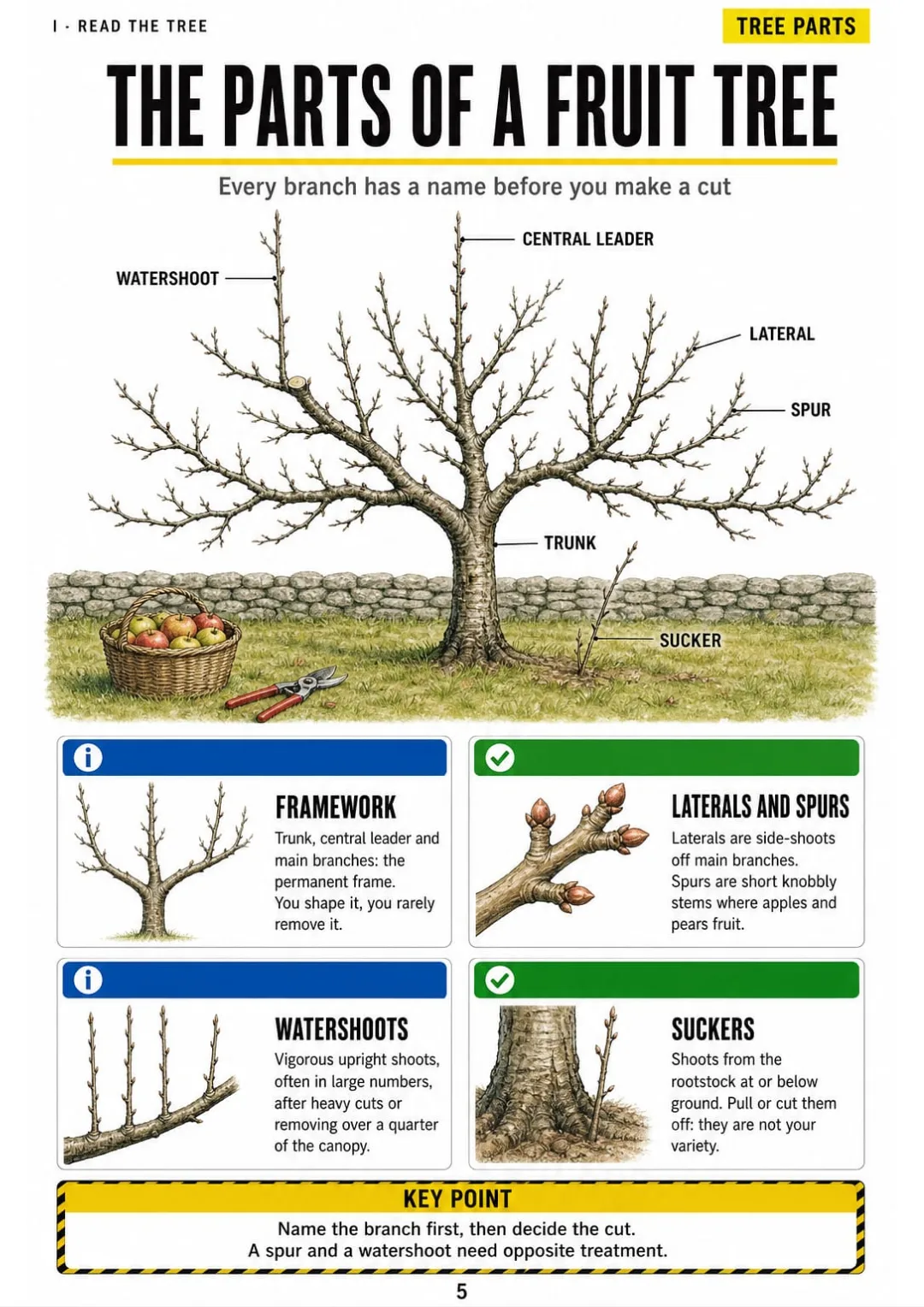
Trunk, leader, main branches, laterals, spurs, watershoots and suckers, labelled on one tree
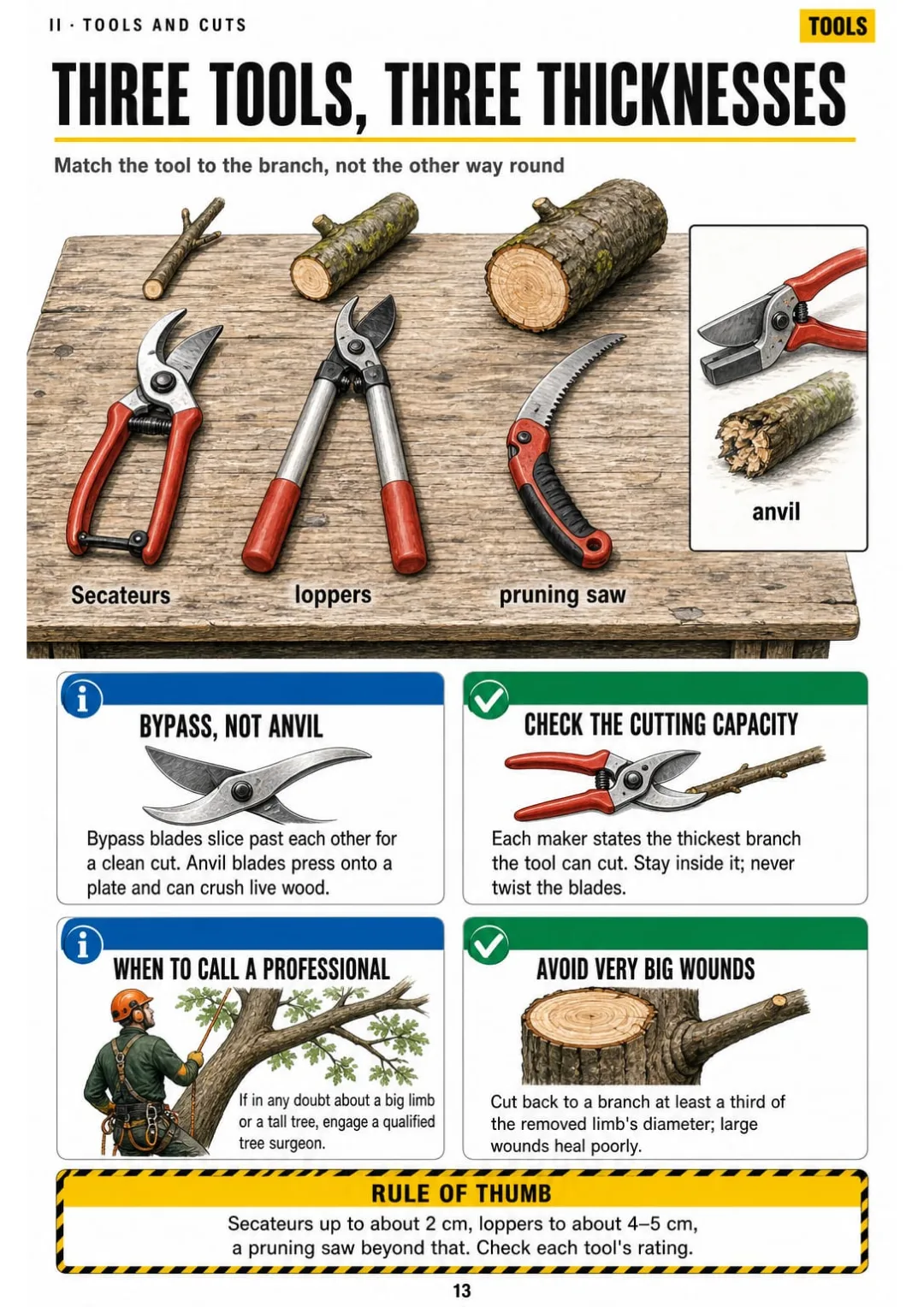
Secateurs, loppers, saw: which tool for which thickness, and when to call a tree surgeon.
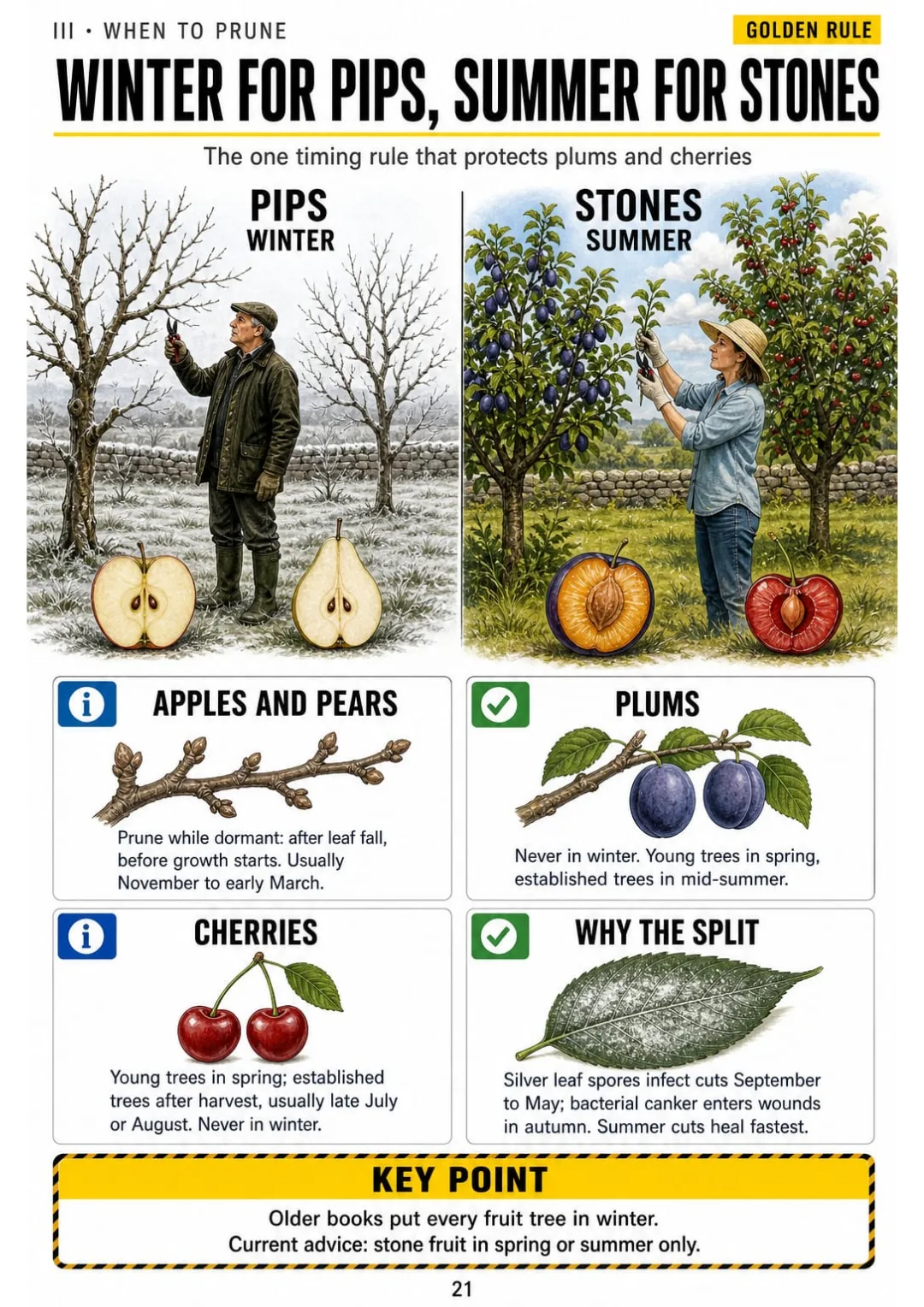
Pip fruit usually November to early March; plums and cherries never in winter.
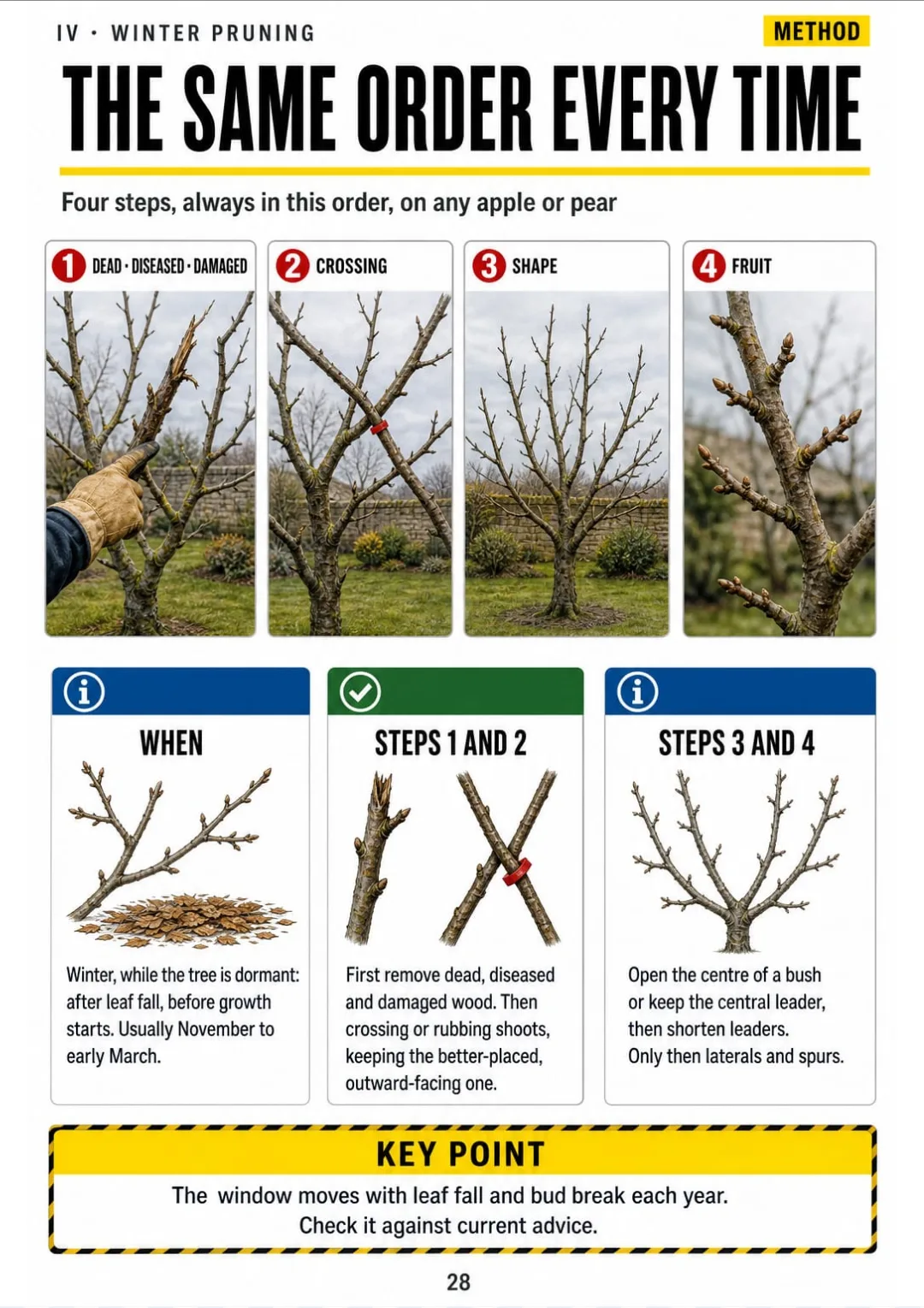
Dead wood → crossing branches → shape → fruit: four steps on every apple and pear
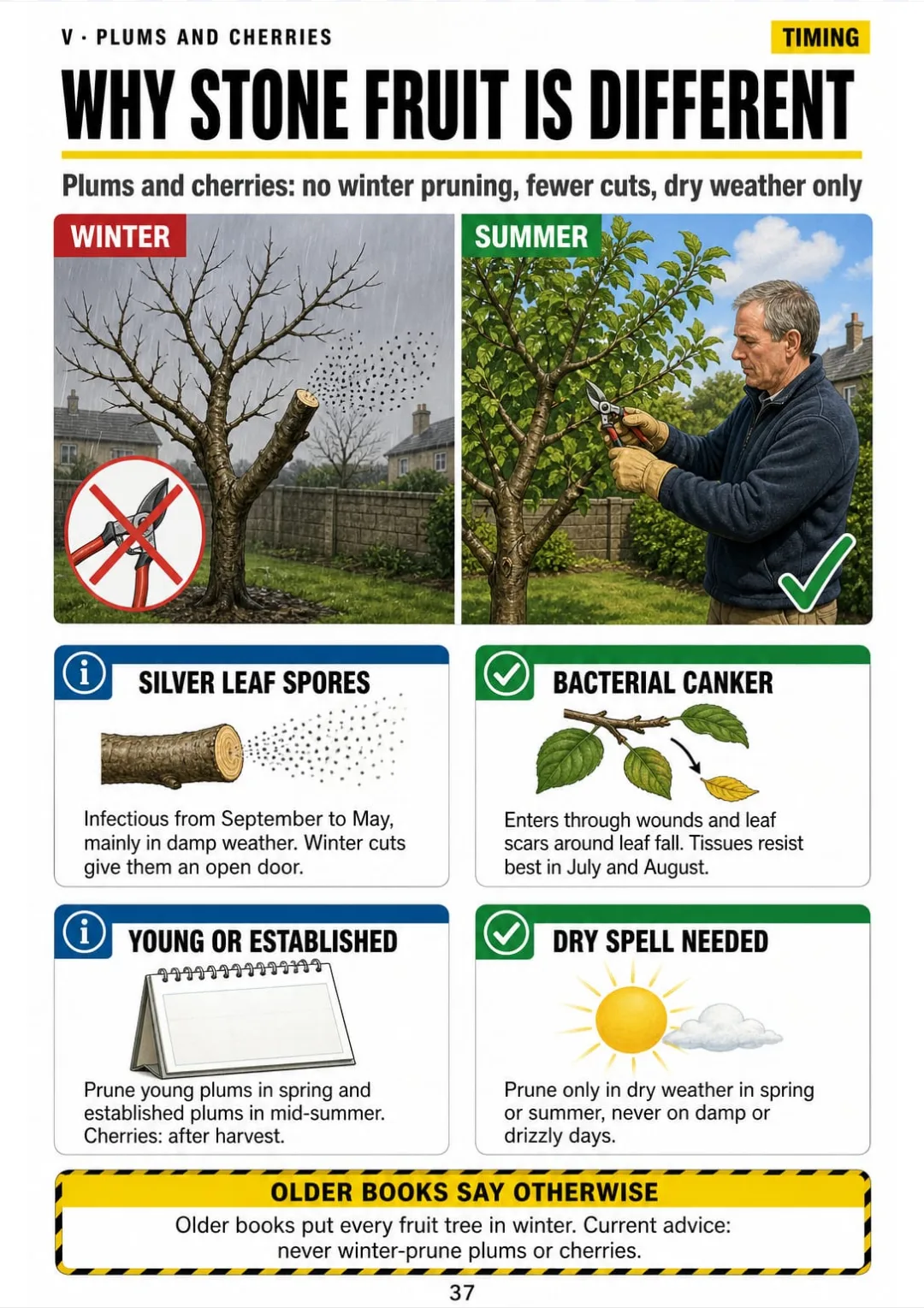
Silver leaf spores are infectious September to May: stone fruit is pruned in spring or summer.
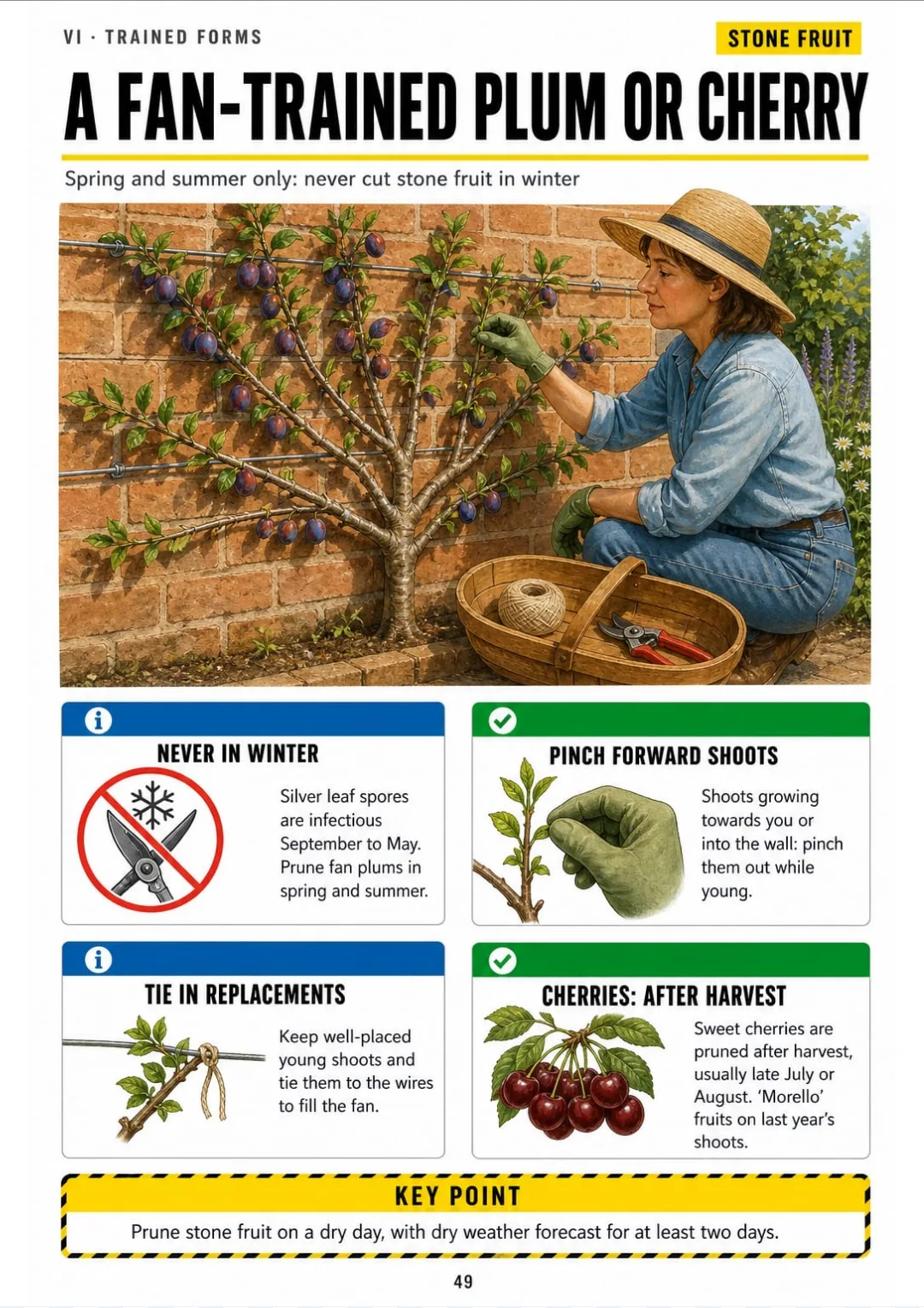
Fan-trained stone fruit: spring and summer pruning only, wires about 15 cm apart
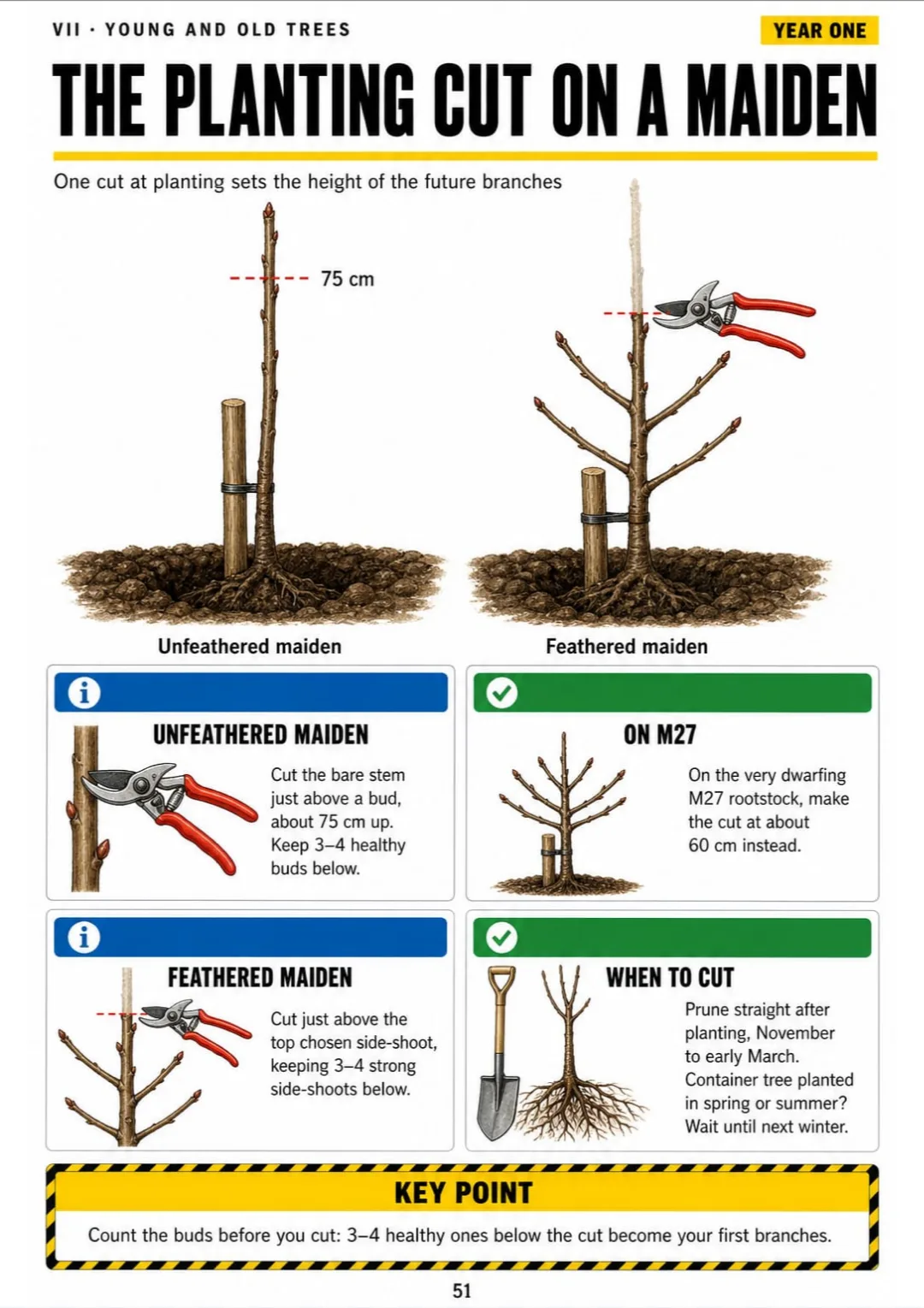
Unfeathered maiden: cut about 75 cm up (60 cm on M27), with 3–4 buds below.
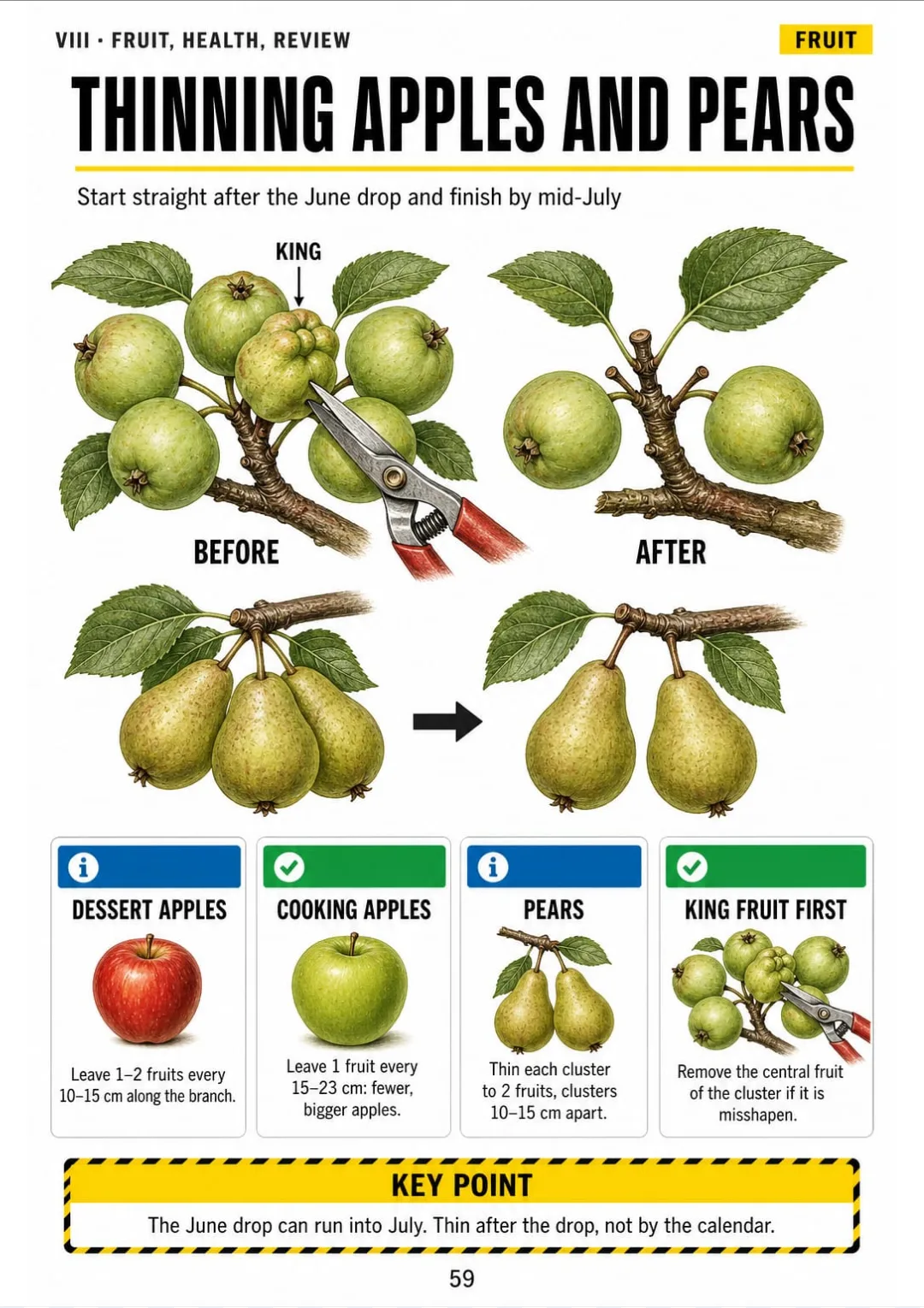
Dessert apples 1–2 every 10–15 cm, cookers 1 every 15–23 cm, pears 2 per cluster

Swipe to see more →

These are real pages from the book. The table of contents is the full one: 8 parts and 60 topics.

The Problem Isn't You. It's How It Was Explained to You.

It's a dry Saturday in January. The apple is done, and you're standing at the plum tree right beside it, secateurs in hand.

You've read about it. Somewhere in a long chapter on pip fruit, stone fruit, dormancy and spores there's a line that says to leave the plum for later. Buried in paragraphs, it never comes back to you at the tree.

Pip fruit usually November to early March; plums and cherries never in winter.

In the book it's one page: apples and pears on one side with November to early March marked, plums and cherries on the other with winter crossed out. You see it once and it stays.

The same goes for fruit buds and leaf buds, the cut above a bud, the three-cut method for heavy branches, the old neglected tree and thinning apples: each one on its own page, drawn.

So you put the secateurs away, leave the plum for spring and know why, without going back to any manual.

COMPARE FOR YOURSELF

The Same Topic, Two Ways to Learn It

THIS
  • The usual guide: line after line
  • Tools and cuts explained only in words
  • You go out to the tree still unsure
The selection of an appropriate cutting implement is determined by the diameter of the wood to be removed. Bypass secateurs are generally suitable for shoots up to approximately 1.5 to 2 centimetres in diameter, beyond which the risk of crushing tissue and straining the mechanism increases. Long-handled loppers provide the additional leverage required for branches of up to approximately 4 centimetres, while a pruning saw should be employed for material exceeding this dimension. Where limbs of substantial size or height are involved, the engagement of a qualified arborist is advised.
FOR THIS
  • Each tool drawn next to the branch it cuts
  • The thicknesses in one box
  • You see it and you get it
Secateurs, loppers, saw: which tool for which thickness, and when to call a tree surgeon.
CONTENTS

Take a Look at the 8 Parts and 60 Topics

Reading the tree, tools and the right cut, when to prune in Ireland, winter pruning apples and pears, plums and cherries, cordon, espalier and fan, young and old trees, and fruit, health and review: 64 pages, all illustrated.

IRead the Tree First · pp. 5-12
  1. The Parts of a Fruit Tree
  2. Fruit Bud or Leaf Bud?
  3. What a Spur Looks Like
  4. Spur Bearers and Tip Bearers
  5. This Year's Wood, Last Year's Wood
  6. Rootstock Decides the Size
  7. Find the Graft Union
  8. Tree Shapes Side by Side
IITools and the Right Cut · pp. 13-20
  1. Three Tools, Three Thicknesses
  2. Clean and Sharp Every Time
  3. The Cut Above a Bud
  4. Choose the Bud, Choose the Direction
  5. Respect the Branch Collar
  6. The Three-Cut Method for Heavy Branches
  7. Heading Cut or Thinning Cut
  8. Wound Paint and the Irish Weather
IIIWhen to Prune in Ireland · pp. 21-27
  1. Winter for Pips, Summer for Stones
  2. Pick a Dry Day
  3. Summer Pruning of Trained Trees
  4. Month by Month: November to February
  5. Month by Month: March to June
  6. Month by Month: July to October
  7. North, South, Coast and Midlands
IVWinter Pruning Apples and Pears · pp. 28-36
  1. The Same Order Every Time
  2. Step 1: Dead, Diseased, Damaged
  3. Step 2: Crossing and Rubbing Branches
  4. Step 3: Open the Centre
  5. Step 3: Shorten the Leaders
  6. Step 4: Laterals and Spurs
  7. Thinning Overcrowded Spurs
  8. Pruning a Tip Bearer
  9. No More Than a Quarter a Year
VPlums and Cherries · pp. 37-43
  1. Why Stone Fruit Is Different
  2. Pruning an Established Plum
  3. Propping Branches Heavy with Plums
  4. Pruning a Sweet Cherry
  5. Pruning a Sour Cherry
  6. Silver Leaf: Spot It Early
  7. Bacterial Canker on Stone Fruit
VICordon, Espalier and Fan · pp. 44-50
  1. Trained Forms at a Glance
  2. Wires and Supports
  3. Summer Pruning a Cordon
  4. Building an Espalier Tier
  5. Keeping an Espalier Flat
  6. A Fan-Trained Plum or Cherry
  7. Stepover Apples for Small Plots
VIIYoung Trees and Old Trees · pp. 51-58
  1. Planting Cut: The Maiden Tree
  2. Year Two: Choosing the Framework
  3. Year Three: Filling the Frame
  4. Training a Central Leader Tree
  5. Old Neglected Tree: Assess First
  6. Renovation Year One
  7. Renovation Years Two and Three
  8. Taming Water Shoots
VIIIFruit, Health and Review · pp. 59-64
  1. Thinning Apples and Pears
  2. Canker and Scab in a Wet Climate
  3. Ladders and Working at Height
  4. Nesting Birds and Clearing Up
  5. The Most Common Pruning Mistakes
  6. Your Pruning Checklist

One Page, One Topic, All Clear

Think of it this way:

It's February. The old apple tree at the end of the garden is a tangle, and you're standing under it with the loppers, wondering where to start.

You open the page "The Same Order Every Time" and the four steps are drawn on one tree: dead, diseased and damaged wood first, then crossing branches, then the shape, then the fruit.

Silver leaf spores are infectious September to May: stone fruit is pruned in spring or summer.

It works the same way for fruit buds, the planting cut on a maiden, an espalier tier, silver leaf and thinning apples: each one on its own page.

Fruit Tree Pruning Illustrated is 8 parts and 60 topics, all drawn, with the most common mistakes and a pruning checklist at the end.

What you see drawn, you don't have to memorize.

What's Inside Fruit Tree Pruning Illustrated:

Ipp. 5-12

Read the Tree First

The parts of a fruit tree, fruit buds and leaf buds, spurs, spur and tip bearers, old and new wood, rootstocks, the graft union and the tree shapes side by side.

IIpp. 13-20

Tools and the Right Cut

Secateurs, loppers and saw by thickness, clean sharp blades, the cut above a bud, the branch collar, the three-cut method, heading and thinning cuts and wound paint in Irish weather.

IIIpp. 21-27

When to Prune in Ireland

Winter for pips and summer for stones, picking a dry day, summer pruning of trained trees and a month-by-month calendar for Irish regions.

IVpp. 28-36

Winter Pruning Apples and Pears

The same four steps every time: dead wood, crossing branches, opening the centre, leaders, laterals and spurs, tip bearers and the quarter-a-year rule.

Vpp. 37-43

Plums and Cherries

Why stone fruit is different, an established plum, propping heavy branches, sweet and sour cherries, silver leaf and bacterial canker.

VIpp. 44-50

Cordon, Espalier and Fan

Trained forms at a glance, wires and supports, cordons, espalier tiers, a fan-trained plum or cherry and stepover apples for small plots.

VIIpp. 51-58

Young Trees and Old Trees

The planting cut on a maiden, years two and three, a central leader tree, assessing an old tree, the three-year renovation and taming water shoots.

VIIIpp. 59-64

Fruit, Health and Review

Thinning apples and pears, canker and scab in a wet climate, ladders and working at height, nesting birds, the most common mistakes and your checklist.

At the end of the book: A month-by-month calendar for Irish gardens, the most common pruning mistakes and a pruning checklist.
Plus: 2 Free Books

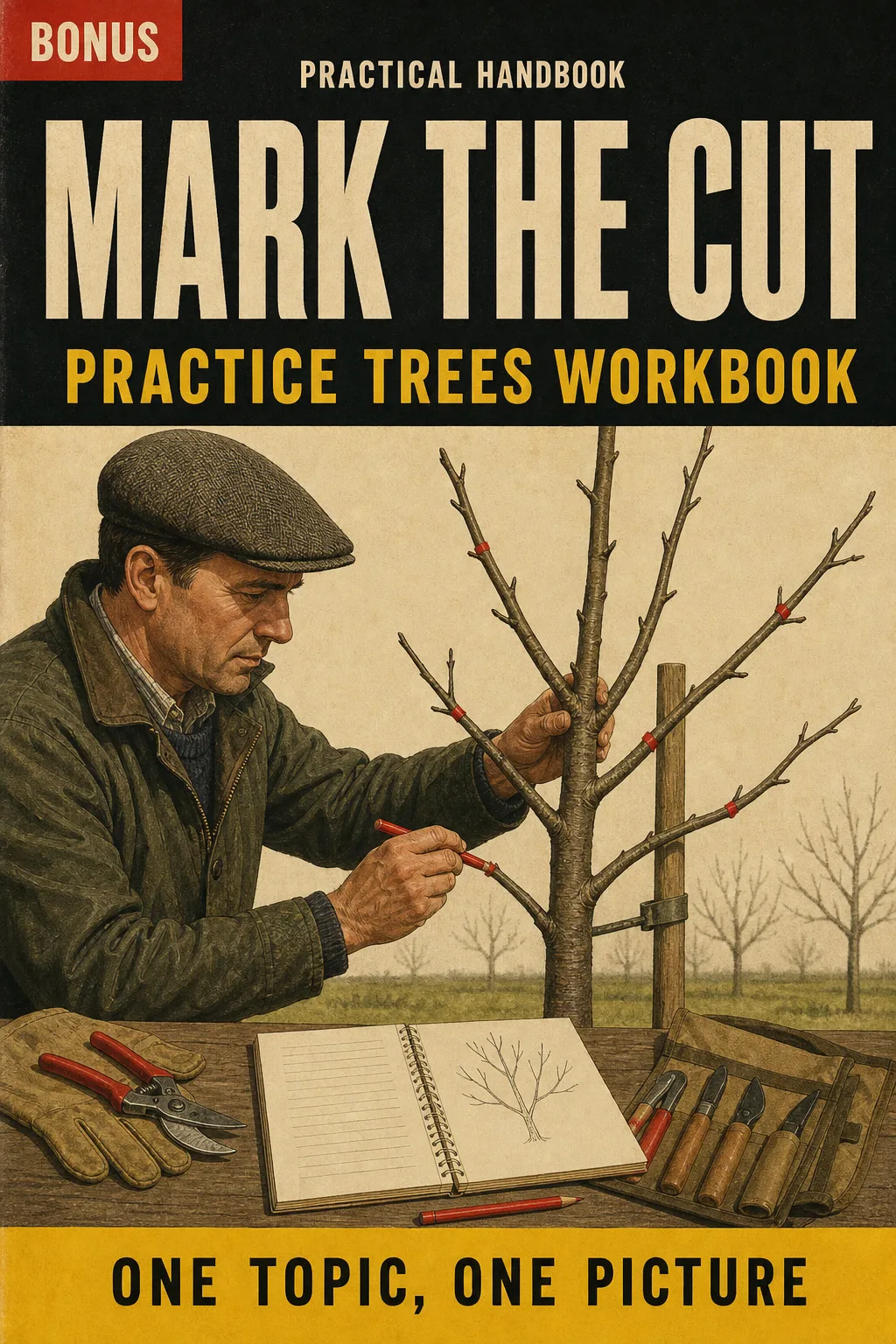
Mark the Cut: Practice Trees Workbook

BONUS 1: «Mark the Cut: Practice Trees Workbook»

Value on its own: US$ 17.90

Drawn trees for you to mark where you'd cut, with the answers on the next page, so you can practise at the kitchen table before you go out with the secateurs.

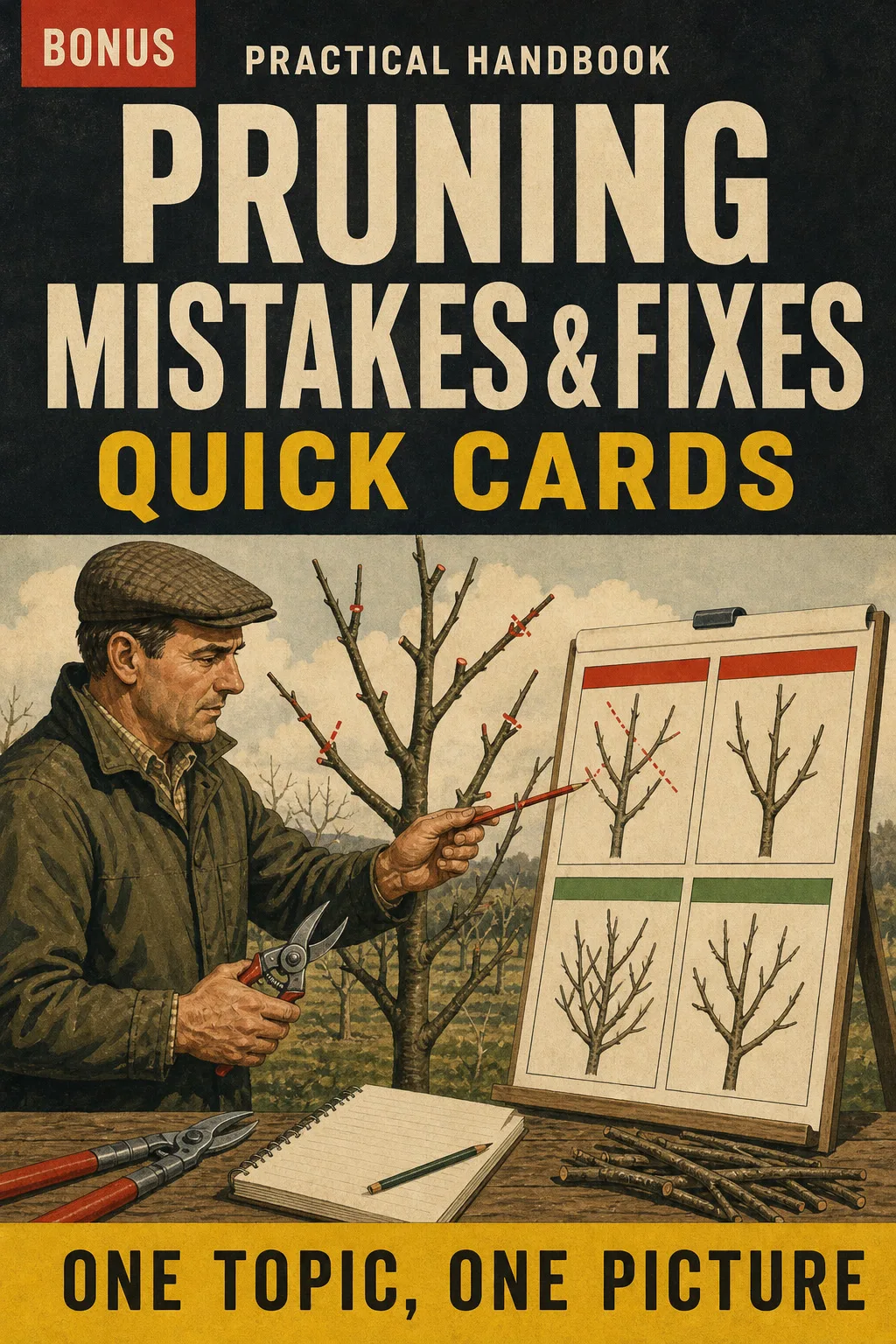
Pruning Mistakes & Fixes: Quick Cards

BONUS 2: «Pruning Mistakes & Fixes: Quick Cards»

Value on its own: US$ 14.90

The most common pruning mistakes, each one drawn before and after on a single card, so you can spot them on your own tree and know how to put them right.

Fruit Tree Pruning Illustrated with 2 Free Books

  • Fruit Tree Pruning Illustrated: 64 illustrated pagesUS$ 63
  • BONUS 1: Mark the Cut: Practice Trees WorkbookUS$ 17.90
  • BONUS 2: Pruning Mistakes & Fixes: Quick CardsUS$ 14.90
  • High-resolution PDF to printIncluded
Total value US$ 95.80
YOUR PRICE:
US$ 27
You save US$ 68.80
YES, I WANT FRUIT TREE PRUNING ILLUSTRATED FOR US$ 27

📄 This is a digital PDF book sent to your email: nothing is printed or shipped.

Secure purchaseEncrypted payment30-day guarantee

PDF by email: We email you Fruit Tree Pruning Illustrated as a PDF, together with the two free books. It's a single payment: no installments, no extra charges.

Who This Book Is For

You've just inherited a fruit tree

You've just inherited a fruit tree

The book starts by reading the tree: leader, laterals, spurs, fruit buds. You know what you're looking at before you pick up the secateurs.

Winter pruning is on the way

Winter pruning is on the way

The month-by-month calendar and the four steps, always in the same order, are ready to print and take out to the garden or the allotment.

You've pruned by eye for years

You've pruned by eye for years

The pages on fruit buds, leaf buds and spurs show why some years bring leaves and little fruit, and what to leave on next time.

Everything You Get Today

US$ 95.80US$ 27
YES, I WANT FRUIT TREE PRUNING ILLUSTRATED FOR US$ 27

📄 This is a digital PDF book sent to your email: nothing is printed or shipped.

30DAYS
GUARANTEE

30-Day Guarantee

Try Fruit Tree Pruning Illustrated for 30 days, bonus books included.

We refund everything if the file won't open, if the book isn't what you see here, if you were charged twice or if the email doesn't arrive. Just email us.

You pay once. No subscriptions.

Frequently Asked Questions

Is it for me if I already prune a bit, by eye?

Yes. If you've never pruned, it starts from the parts of the tree. If you already do, the same-order method, the bud pages and the Irish calendar put order into what you do.

Is it written for Ireland, or for English gardens?

It's written for Irish gardens. The calendar follows Teagasc horticulture guidance and Met Éireann climate data for a wet climate: picking a dry day, canker and scab, and wound paint in Irish weather. The pages on plant protection products follow DAFM rules. Every season and interval is marked so you can check it against current advice.

Is it official material?

No. It's an independent illustrated book. No organisation publishes, approves or endorses it.

Does it replace a pruning course or a tree surgeon?

No. It's illustrated study material for home gardeners. For large or dangerous branches, work at height or anything near power lines, call a qualified tree surgeon.

Does it work for Irish weather and my part of the country?

Yes. The month-by-month calendar is set out for Irish regions, with dry-day timing, canker and scab in a wet climate and wound paint in Irish weather each on its own page.

When and how does it arrive?

The book and the 2 free books arrive as PDFs by email, to the address you enter at checkout.

Do I have to pay every month?

No. It's a one-off payment, with no subscription.

Can I have it on paper?

Yes. Print it at home or at a print shop, the whole book or just the pages you want to take to the garden or the allotment.

How does the refund work?

You have 30 days. We refund everything if the file won't open, if the book isn't what you see on this page, if you were charged twice or if the email doesn't arrive: just email us.

Before You Close This Page

No more rereading pages that don't stick.

The cut above a bud is drawn, and that's it.

You go out to the tree knowing where everything is.

Drawings make studying faster.

The book is right below.

One-time payment: US$ 27 · Guarantee: 30 days · PDF by email

YES, I WANT FRUIT TREE PRUNING ILLUSTRATED FOR US$ 27

📄 This is a digital PDF book sent to your email: nothing is printed or shipped.